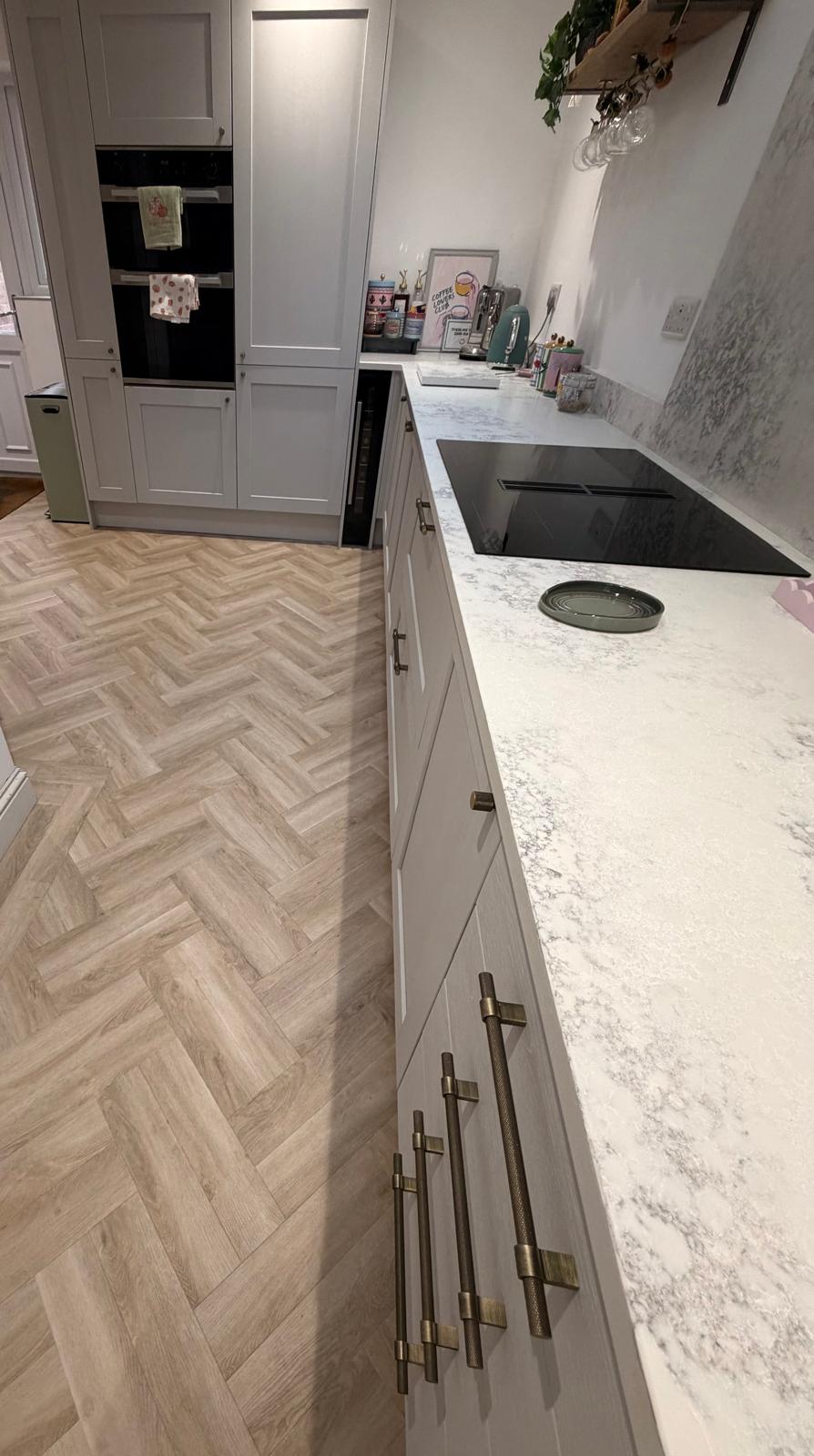
01 · Kitchens
Composed around spills.
A practical surface without sacrificing pattern, warmth or a considered finish.
Quiet underfoot. Stable through changing seasons. Made for the rooms that work hardest.
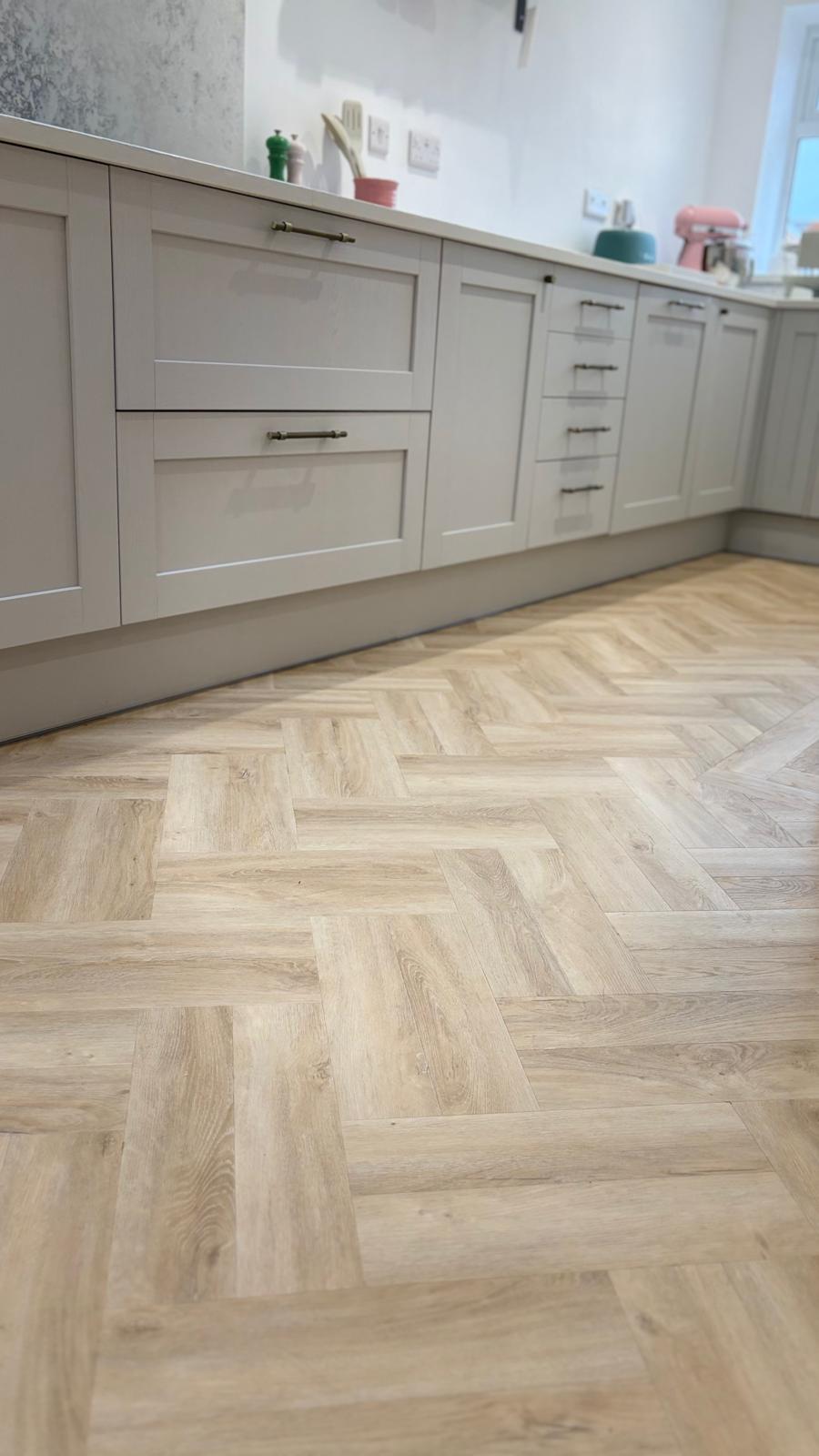 Herringbone · Glue-down LVT
We fit glue-down luxury vinyl tile because it behaves like part of the room rather than something floating above it. Each plank or block is bonded directly to a properly prepared subfloor, removing movement, bounce and the hollow sound associated with many click systems.
The result is calm, quiet and dependable: a floor that can move from hallway to kitchen, sit neatly beside carpet or tile and take the daily rhythm of children, pets and busy family life in its stride.
The difference is not simply the surface you choose. It is the preparation beneath it and the precision with which every line meets a wall, threshold and doorway.
Specialist adhesive bonds every piece directly to the prepared subfloor, so the finish does not shift, flex or bounce when walked on.
The permanent bond removes the hollow note of a floating floor and gives busy rooms a composed, reassuring feel.
Glue-down LVT experiences minimal expansion and contraction, making it especially useful across open-plan spaces and suitable heating systems.
Heavy footfall, rolling furniture and everyday household demands are handled without the movement common to many floating installations.
If one plank or tile is damaged, a professional can heat, lift and replace that individual piece rather than disturbing the whole floor.
Typically only a few millimetres thick, it can meet carpet, tile and adjoining rooms with restrained transitions and fewer trip points.
Plank, herringbone, chevron and tailored borders are all possible when the room and the selected product call for them.
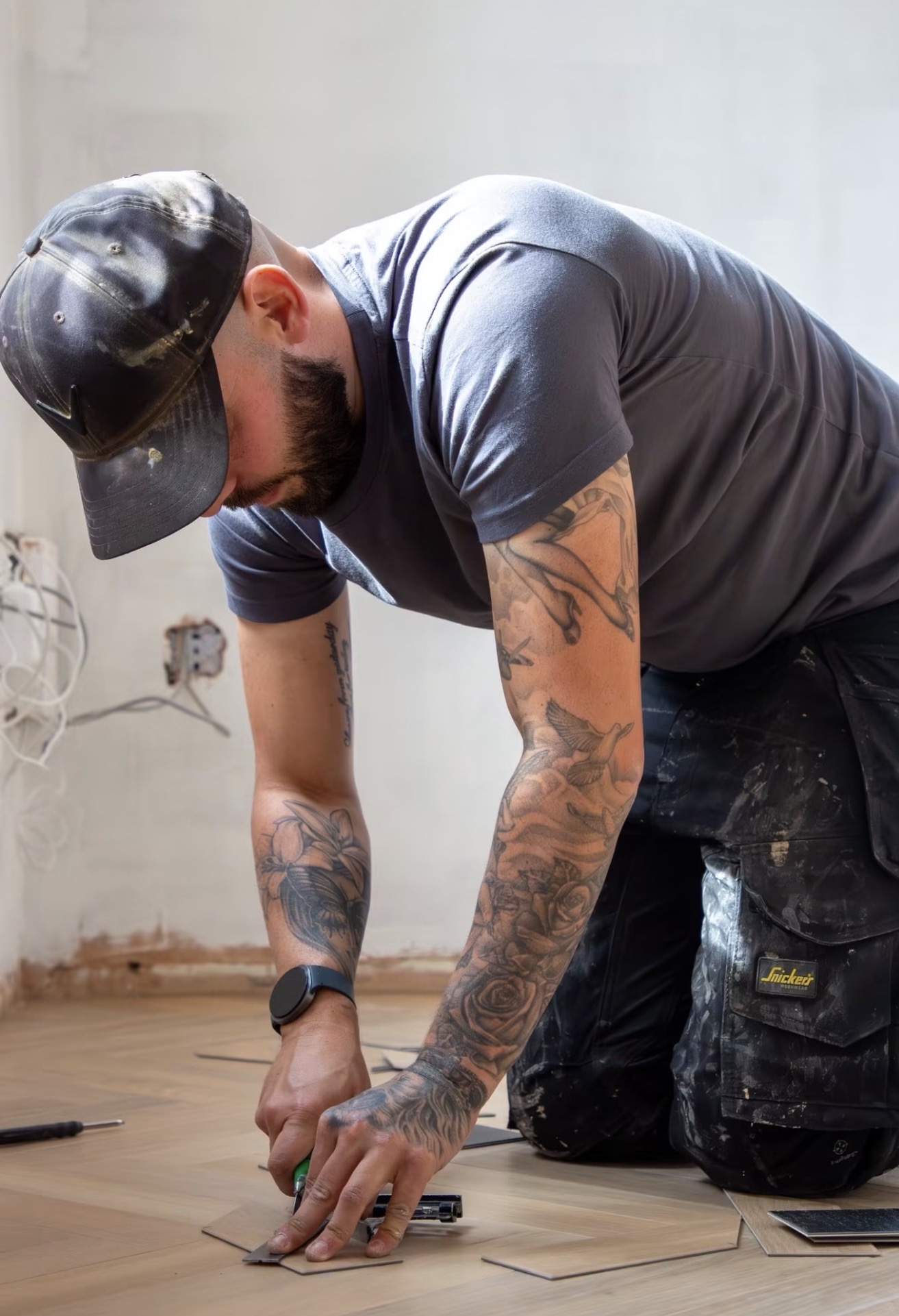
Glue-down LVT is unforgiving of rushed preparation. We assess moisture, levels, thresholds and the condition of the subfloor before we decide how the finished pattern should run.
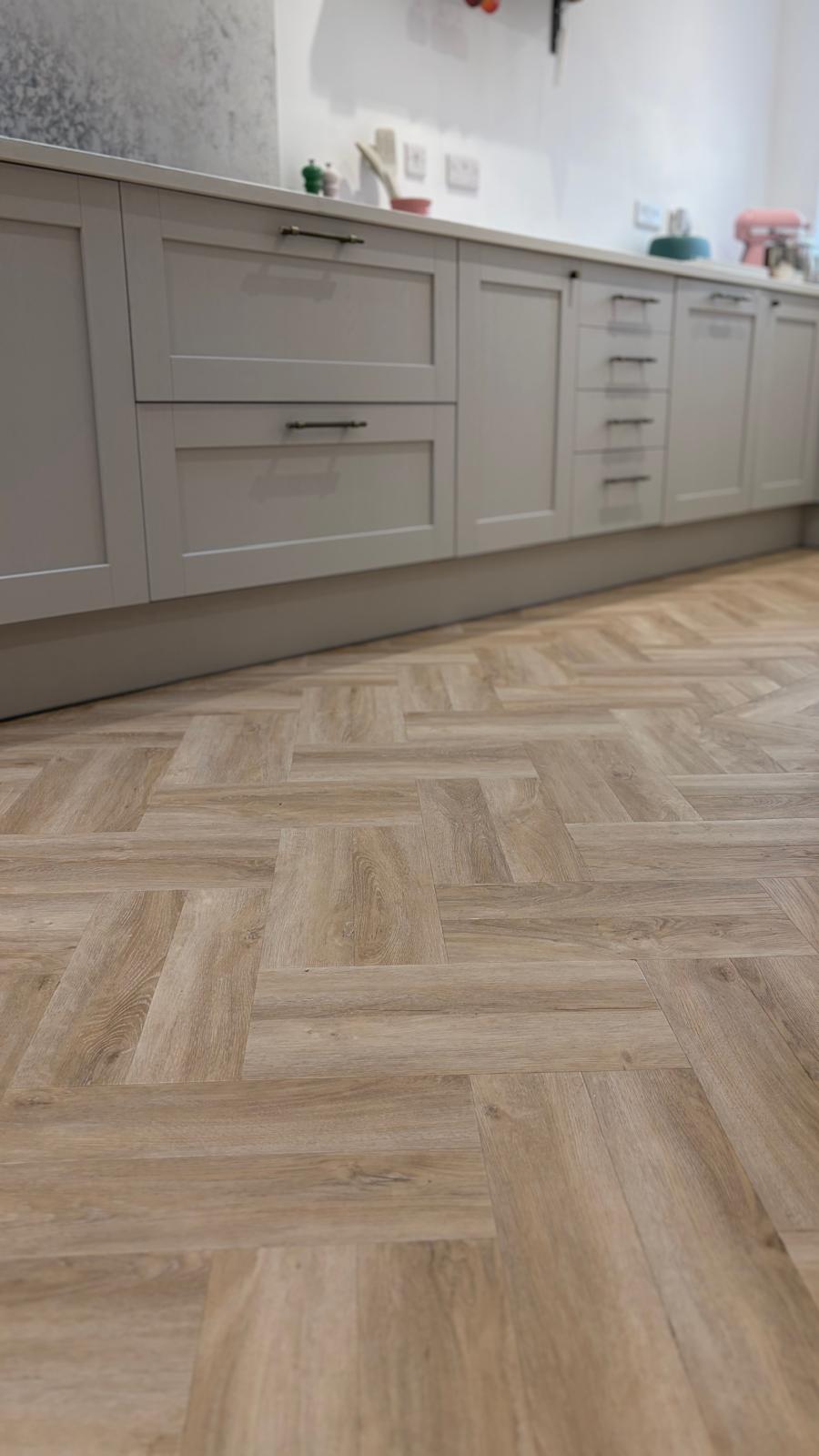
A pale, timber-toned LVT brings pattern to this working kitchen without competing with the cabinetry. Seen close up, the set-out remains consistent through every run.
There is no universal better floor. The right answer depends on the room, the household and what you want the material to become over time.
A practical surface without sacrificing pattern, warmth or a considered finish.
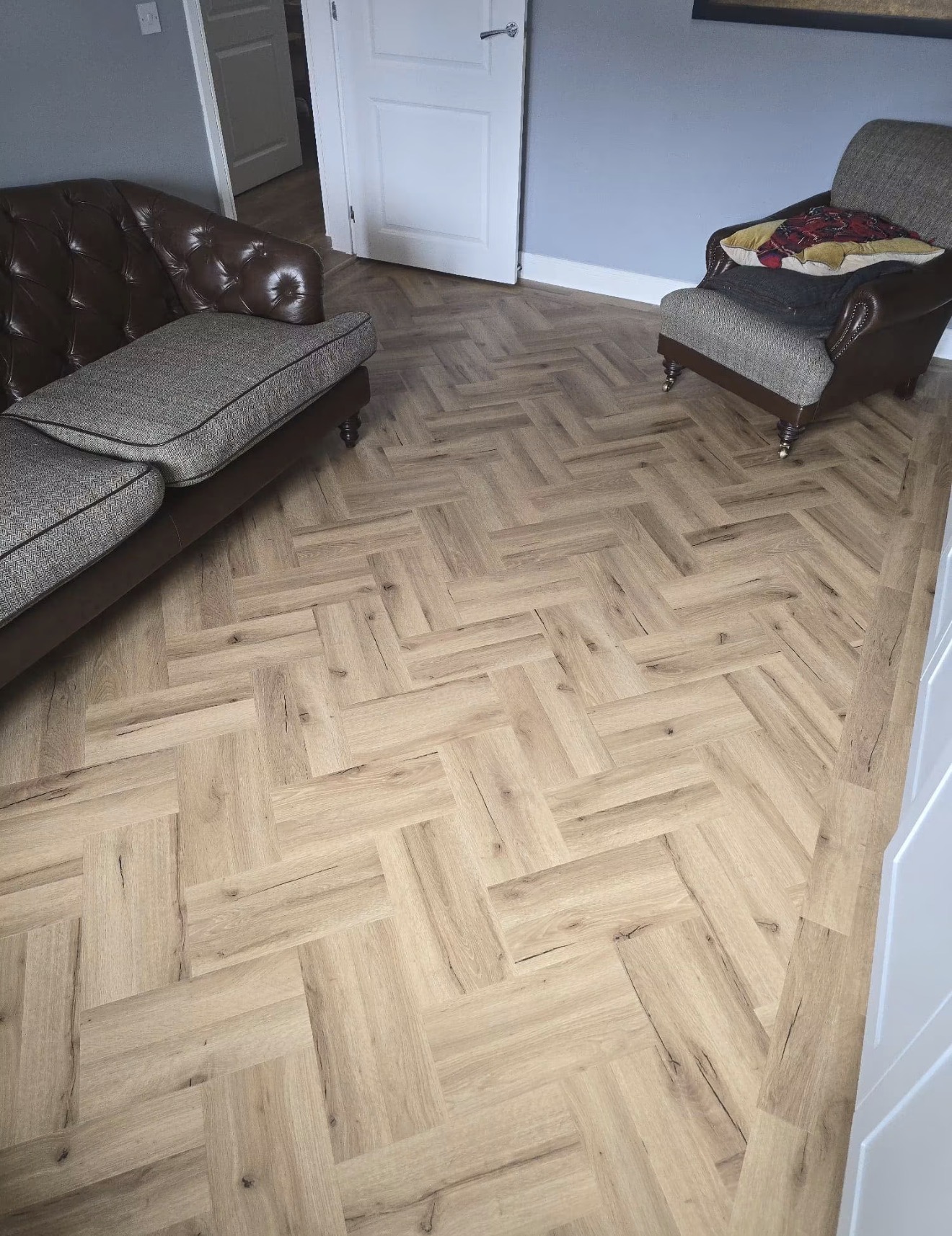
A solid feel for rooms where furniture, family and footfall rarely stand still.
Careful set-out draws the eye through adjoining spaces while handling heavy traffic.
We will confirm product compatibility and preparation requirements against your actual room rather than relying on general assumptions.
Because the floor is bonded directly to the prepared base, it does not rely on a floating locking system. That normally gives a quieter, firmer surface, more controlled transitions and straightforward local repairs.
Yes. LVT follows the surface beneath it closely, so moisture, ridges, hollows and old adhesive can show through or affect the bond. Preparation is part of the finished floor, not an optional extra.
Many glue-down LVT products can, provided the floor, adhesive and heating system are compatible and the temperature limits are observed. We check the relevant product specification before recommending it.
Usually, yes. A professional can heat and lift the affected piece, prepare the small area and bond a replacement without taking up the rest of the room.
It can be, but block size and set-out matter. We assess the principal sightline, doorway positions and likely cuts before recommending the pattern and scale.
Think about exposure to spills, the level of traffic, how much natural variation you want and whether you value future refinishing. During a consultation we can place samples in the room and explain the trade-offs clearly.
We bring the relevant samples, look at the subfloor and help you decide whether glue-down LVT or engineered oak is right for the way your home is lived in.